


A global study by Kaspersky’s internal market research center examines the social consequences of technology-facilitated abuse, focusing on how the damage extends beyond the online world and deeply impacts real-life relationships and communities.

Methodology

This research explores the topic of technology-facilitated abuse, examining its prevalence and impact across a diverse range of regions. A total of 7,600 respondents participated in the study. The research covers multiple countries, including Austria, Brazil, China, Colombia, France, Germany, Greece, India, Indonesia, Italy, Malaysia, Mexico, Morocco, Portugal, Russia, Serbia, Spain, the UK, the USA.

The people closest to you

The popular image of online abuse is still shaped by the idea of a stranger, an anonymous account, a troll from nowhere, someone with no real-world connection to the victim. Kaspersky global study reveals that threats operate within our immediate lives.

Among respondents who experienced tech-facilitated abuse, 40.5% said the primary source was someone they did not personally know. While this remains the largest single category, it also means that nearly 60% of abusers were people the victim knew. Countries where abusers more often than average turned out to be someone close to the victims include USA, Italy, Spain, UK, India and Indonesia.

Sources of abuse

Sources of abuse

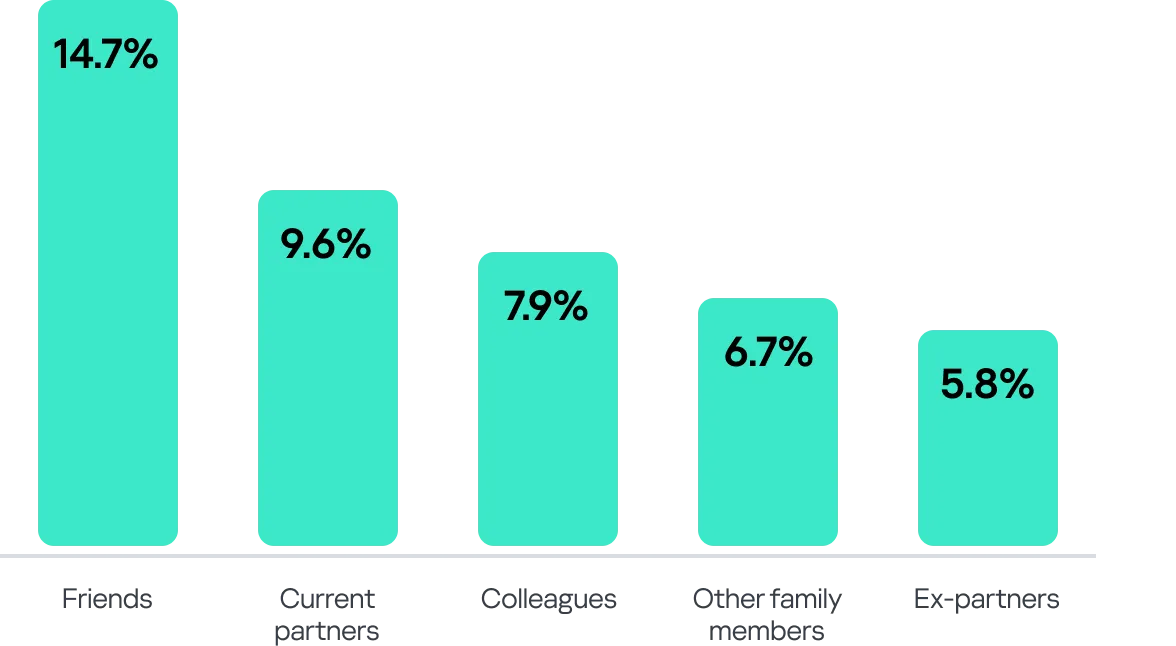
Friends accounted for 14.7% of perpetrators, making them the most commonly known source of abuse. Current partners followed at 9.6%, colleagues at 7.9%, other family members at 6.7%, and ex-partners at 5.8%.

These figures challenge the assumption that online harm is distant or impersonal. Instead, it often emerges within the very relationships that are expected to provide trust, support, and emotional safety.

Among respondents who reported being abused by someone within a specific relationship category such as a friend, a partner, or a family member, the likelihood that they themselves had directed abusive behavior toward that same category of person was significantly higher. Those who were abused by a friend (15%) were more likely to have acted abusively toward a friend (21%), compared to those who had not experienced such abuse. The same pattern holds for partners (10% vs 12%) and family members (7% vs 11%).

This suggests that tech-facilitated abuse can take the form of escalation cycles, where harm is exchanged, mirrored, or normalized within relationships over time.

These findings challenge the persistent assumption that technology-facilitated abuse is primarily anonymous or perpetrated by strangers. Instead, they highlight how such harm is often embedded within existing relationships — spaces typically associated with trust and emotional safety. In these contexts, abuse can become part of a cycle of mutual escalation, where individuals respond to perceived harm, control, or humiliation with further harmful behaviour. Digital environments, with their immediacy and intensity, can amplify these dynamics, making it easier for conflict to escalate and harder to interrupt. Recognising these relational patterns is critical to understanding and addressing the full scope of technology-facilitated abuse.

This cycle is reflected in self-reported behavior

This cycle is reflected in self-reported behavior

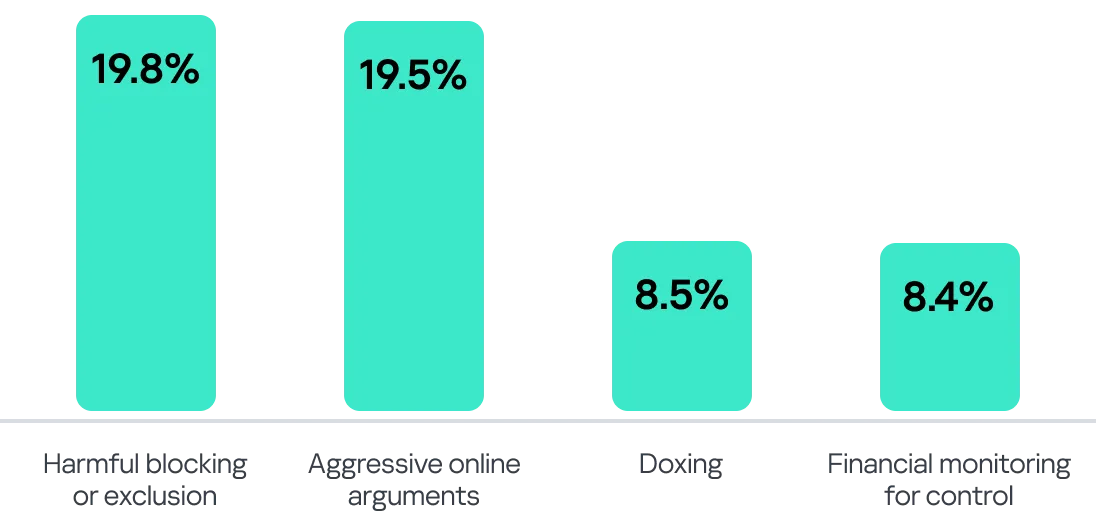
Nearly half of respondents (44.97%) admitted to participating in at least one form of abusive digital behavior in the past 12 months. The most common actions included blocking or excluding someone with the intent to harm (19.8%), engaging in aggressive arguments in group chats or comment sections (19.5%), doxing (8.5%), and using financial monitoring tools to control another person (8.4%).

The generation gap that leaves older people exposed

Awareness and understanding of technology-facilitated abuse vary significantly across age groups, reflecting broader differences in digital literacy and online experience.

Among Gen Z respondents, who grew up with smartphones and constant connectivity, 81.2% said they were familiar with the term “technology-facilitated abuse.” Among Baby Boomers, that figure drops to 64.3%.

This difference becomes even more pronounced when looking at lived experience. Gen Z reported the highest rates of digital abuse of any generation, with nearly 60% having encountered at least one form in the past year. Baby Boomers reported the lowest rates.

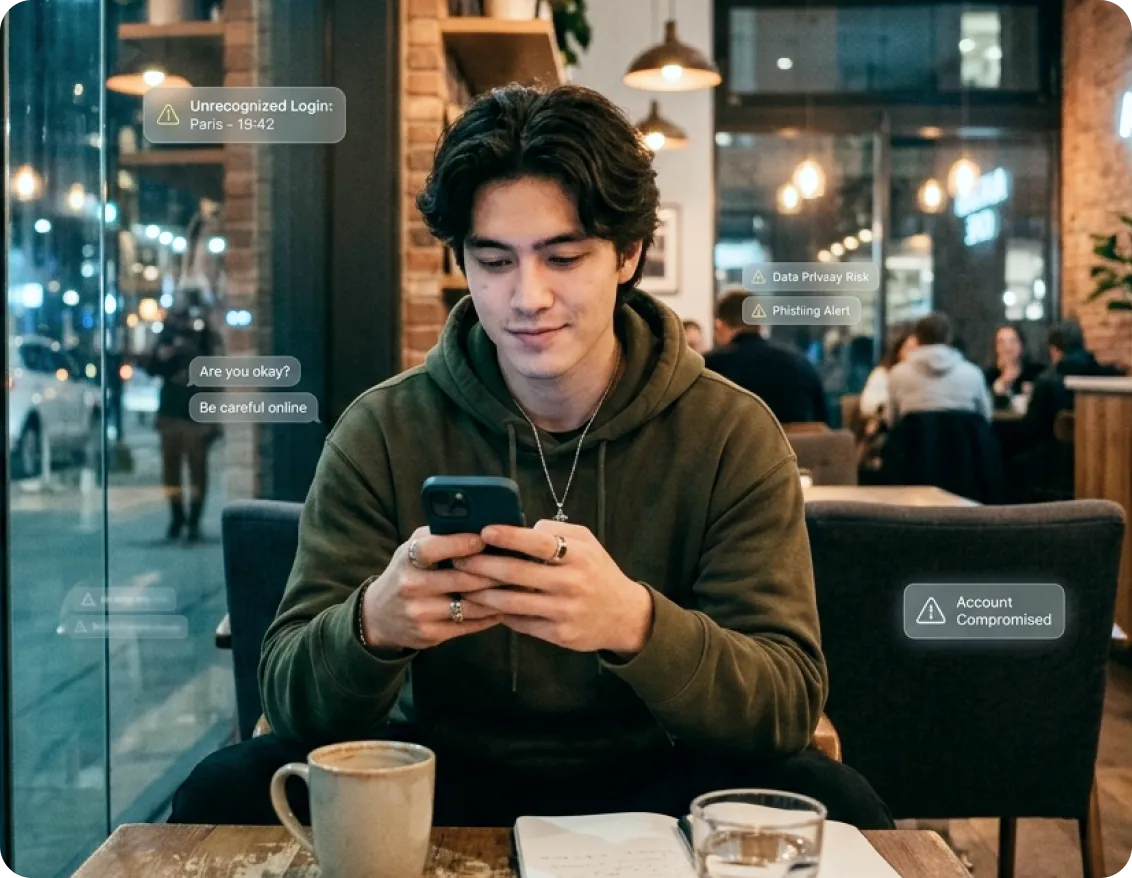
At the same time, higher exposure among younger users does not translate into full protection as growing up with technology does not automatically mean being safe within it.
At the same time, higher exposure among younger users does not translate into full protection as growing up with technology does not automatically mean being safe within it.
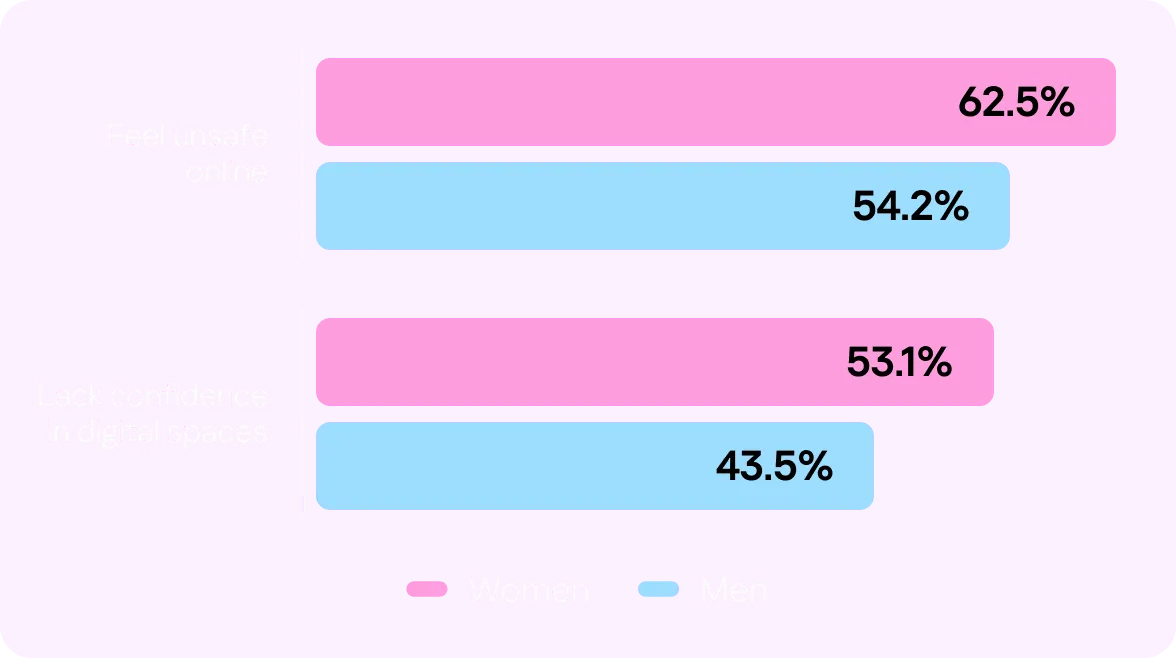
While exposure to technology-facilitated abuse affects all groups, gender introduces an additional layer of vulnerability and perception. Across all age groups, women report significantly higher levels of discomfort and vulnerability in digital environments. 62.5% of women said they feel unsafe online, compared to 54.2% of men. More than half of all women (53.1%) described themselves as lacking confidence in navigating digital spaces, versus 43.5% of men.

These figures suggest that digital environments are not experienced equally. For many women, online spaces are not only a source of connection and opportunity, but also a space of heightened risk and emotional strain.

These figures suggest that digital environments are not experienced equally. For many women, online spaces are not only a source of connection and opportunity, but also a space of heightened risk and emotional strain.

The damage beyond online

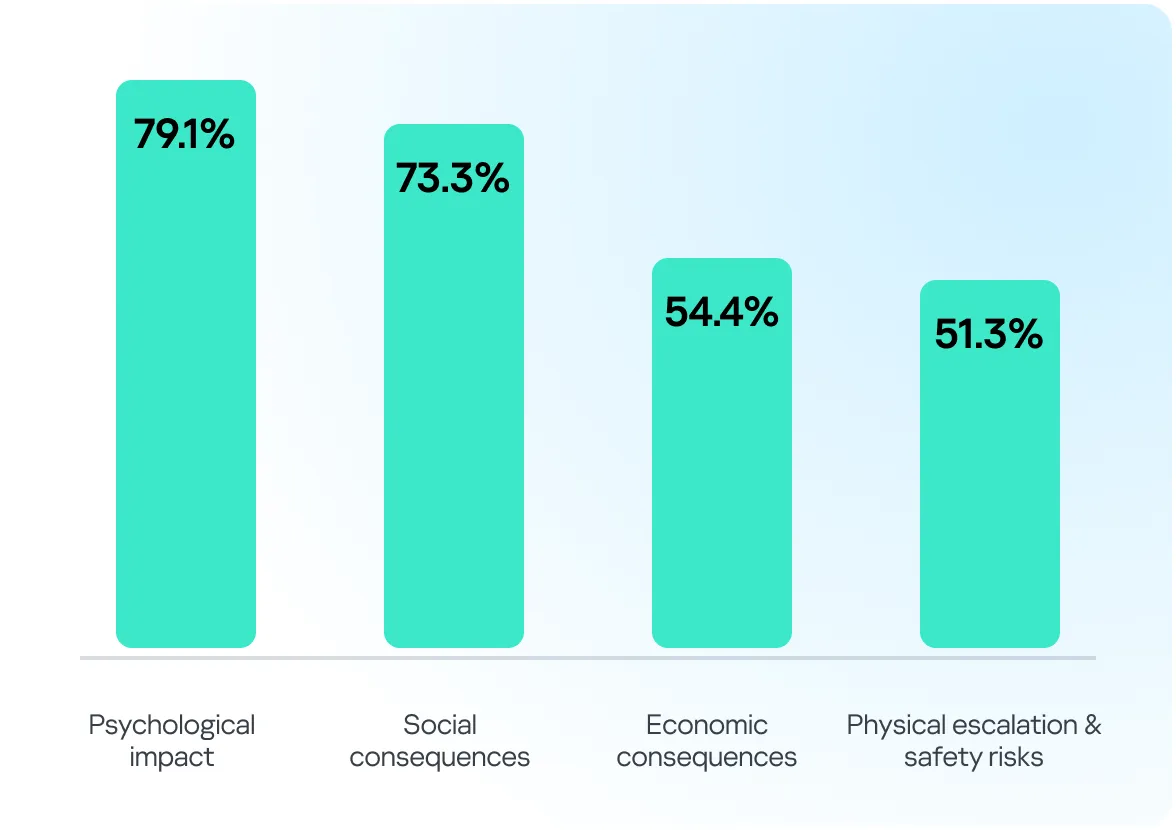
When asked about the consequences of tech-facilitated abuse, a strong majority of respondents recognized its psychological impact. 79.1% pointed to outcomes such as depression, trauma, and long-term stress. Nearly as many (73.3%) acknowledged social consequences, including reputational damage, strained or broken relationships, and increasing isolation.

Only 54.4% of respondents associated tech-facilitated abuse with economic consequences such as career damage, financial loss, or legal expenses. Even fewer (51.3%) acknowledged the potential for physical escalation, real-world violence, threats to personal safety, or the long-term health effects of sustained stress and fear.

Countries where consequences of tech-facilitated abuse are less believed in include Colombia, Mexico, Italy, Serbia, Spain, Morocco, India and Malaysia.

Countries where consequences of tech-facilitated abuse are less believed in include Colombia, Mexico, Italy, Serbia, Spain, Morocco, India and Malaysia.

The damage beyond online

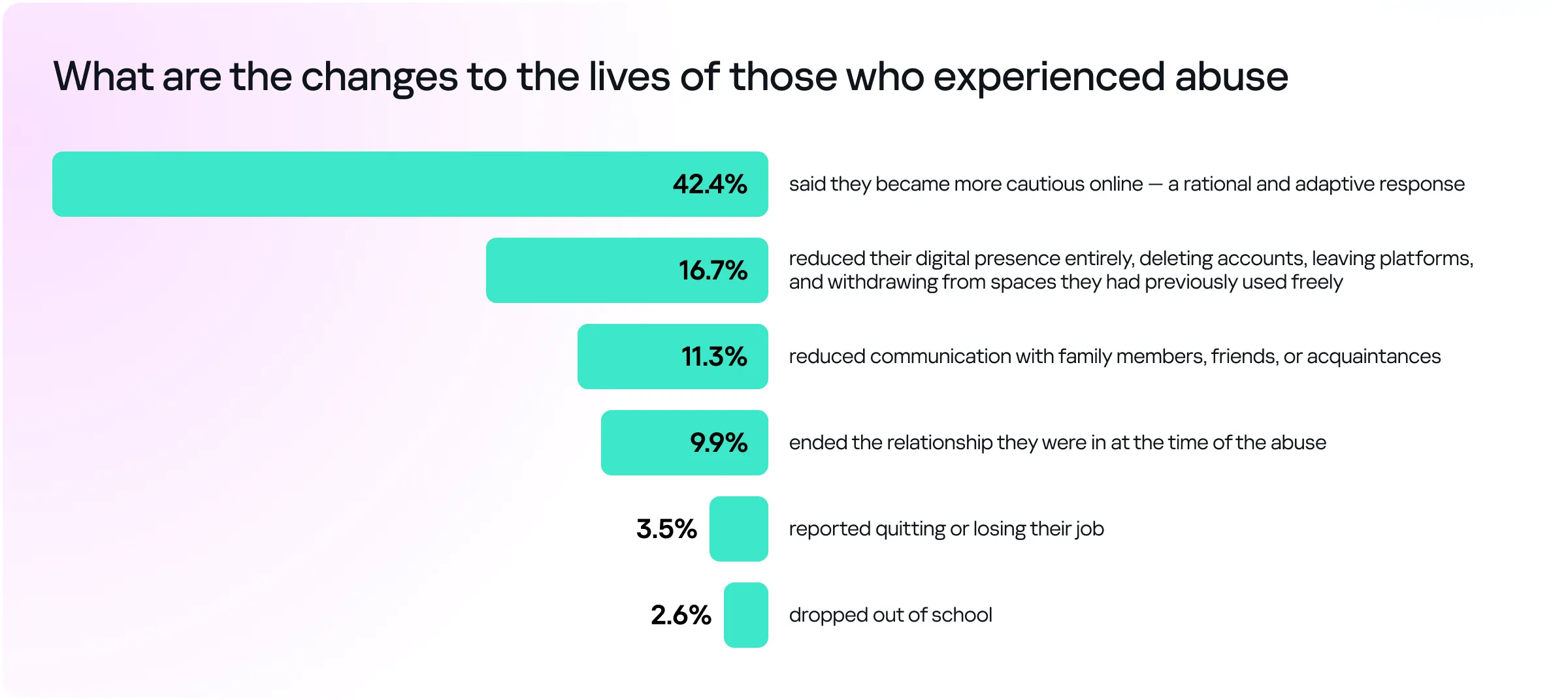
If the consequences of tech-facilitated abuse extend far beyond the digital space, the response to it remains strikingly limited.

22.3% of those who experienced abuse said they did nothing about it. Among Baby Boomers, that figure rises to 36.6%, meaning more than one in three chose not to act at all.

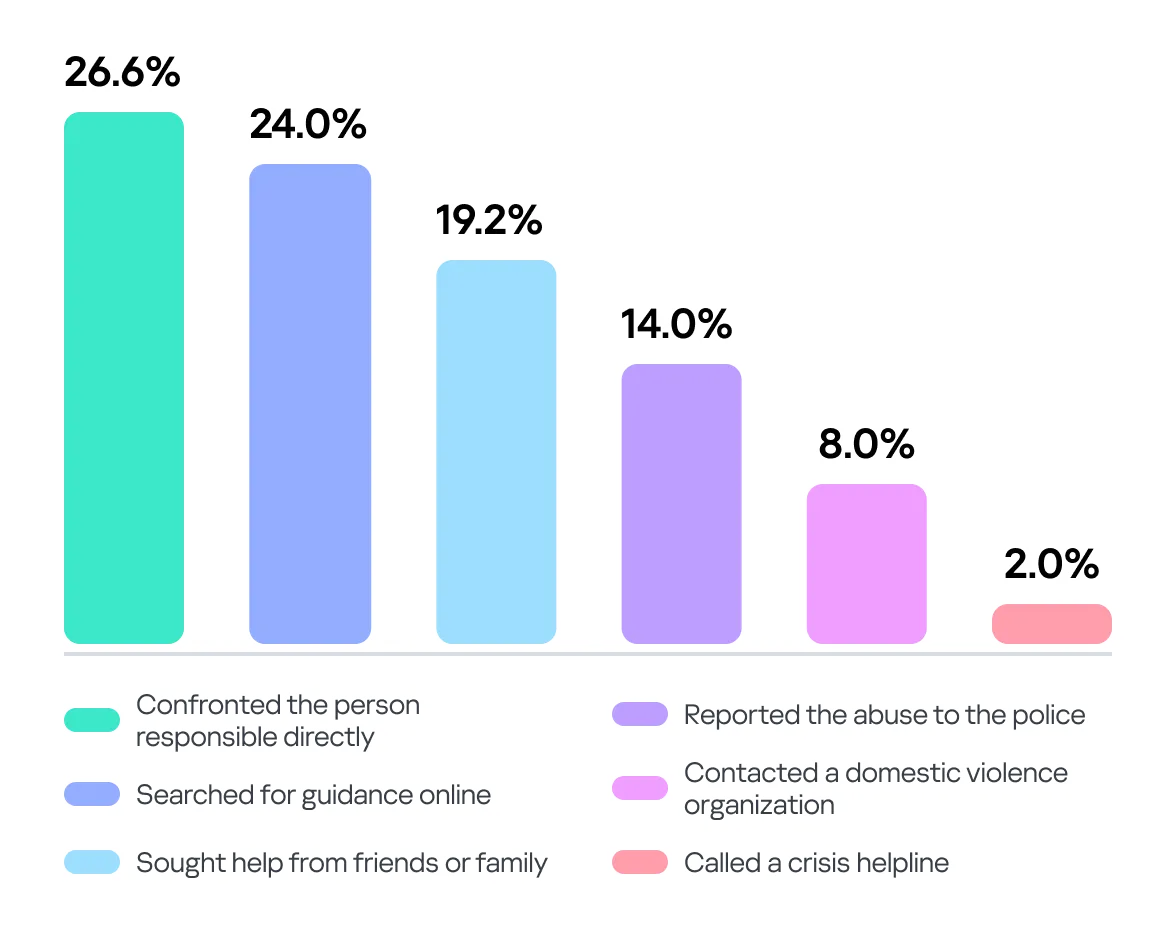
Even among those who did respond, actions were often informal and contained within personal circles. The most common reaction was to talk directly to the person responsible (26.6%), followed by searching online for guidance (24%) and asking friends or family for help (19.2%). These responses suggest an attempt to manage the situation privately, rather than escalating it to formal support systems.

Very few turned to institutions. Fewer than 14% reported the abuse to the police. Less than 8% contacted a domestic violence organization. Fewer than 2% reached out to a helpline.

The most passive countries more often than others choosing not to do anything are Austria, Germany, Greece, Portugal, Serbia and Russia. Countries where active defense like going the police or other protecting organizations is performed more often than average include USA, India, Malaysia and Indonesia.

This gap between harm and action is not only visible among victims, it also extends to witnesses as well. Countries where people more often claimed to see their loved ones and acquaintances get digitally abused include Brazil, Colombia, Mexico, USA, Greece, Morocco and India. Here too USA and India turned out to be the most abused countries of all. When respondents observed abuse happening to someone they knew, 12.3% said they did nothing. Importantly, this inaction was rarely driven by indifference. Instead, it was shaped by uncertainty. Nearly a third (31.7%) said they simply did not know how to help, while 22.6% were unsure whether their involvement would be wanted or appropriate.

This uncertainty is mirrored in how responsibility for the problem is perceived. When asked who should be responsible for addressing tech-facilitated abuse, 40% of respondents pointed to governments, emphasizing the need for regulation and enforcement. Another 41.6% framed it as a broader societal issue, something that requires collective awareness and shared responsibility. Only 18.3% saw it primarily as an individual responsibility.

These findings reflect a broader challenge we see across technology-facilitated abuse: recognition does not always translate into action. In our recent work on cyberstalking, we found that online forms of stalking are often perceived as less criminal than offline stalking, despite their serious impact. Similarly, our tech abuse personas research shows that many victim-survivors had not sought support before reaching specialist services, often because tech abuse is difficult to recognise, normalised in digital spaces, or hard to evidence. Taken together, this points to a critical accountability gap. While governments, platforms and wider society all have important roles to play, meaningful change also depends on individuals recognising harmful behaviours, taking them seriously, and acting before abuse becomes normalised or escalates.

Conclusion

The report shows that abusive behaviors, including monitoring, exclusion, harassment, and the non-consensual sharing of personal information are often embedded in everyday digital interactions and are not always identified as abuse.

The findings indicate that the issue is widespread and affects individuals across different age groups and social contexts. It is frequently relational in nature, occurring between people who know each other, and spans both online and offline environments.

At the same time, a gap remains between experience, recognition, and response. A significant proportion of individuals who encounter these behaviors do not identify them as abuse or do not take action, either as targets or as witnesses. To change this and to minimize risks of tech-enabled abuse, we need to increase awareness across different groups as well as their preparedness, which requires actions not only from individuals themselves, but also from society and digital industries.

Ultimately, addressing tech-facilitated abuse calls for a collaborative effort that involves that requires a shift in how digital behaviors are perceived and addressed. The more we understand the complexities of the digital world, the better equipped we will be to create safer online environments for everyone.

Recommendations:

Recognize the signs

Tech-facilitated abuse can take many forms, from controlling behavior and constant monitoring to harassment, exclusion, or threats. Trust your instincts if something feels wrong.

Take early action

If you suspect abusive behavior, do not ignore it. Document incidents where possible and seek guidance before the situation escalates.

Protect your digital space

Use strong, unique passwords, enable two-factor authentication, and regularly review your account and privacy settings.

Be cautious with access

Avoid sharing devices, accounts, or sensitive information unless necessary, and be mindful of apps or permissions that allow monitoring.

Use trusted tools

Security solutions can help identify suspicious activity, including stalkerware, unauthorized access, or unknown tracking devices.

Seek support

Reach out to trusted individuals or professional organizations if you need help. You do not have to navigate this alone.

Know how to help others

If you witness abuse, do not assume someone else will act. Even small steps such as checking in, offering support, or guiding someone to resources can make a difference.

Stay informed

As digital environments evolve, so do risks. Awareness is one of the most effective forms of protection.

Additional resources:

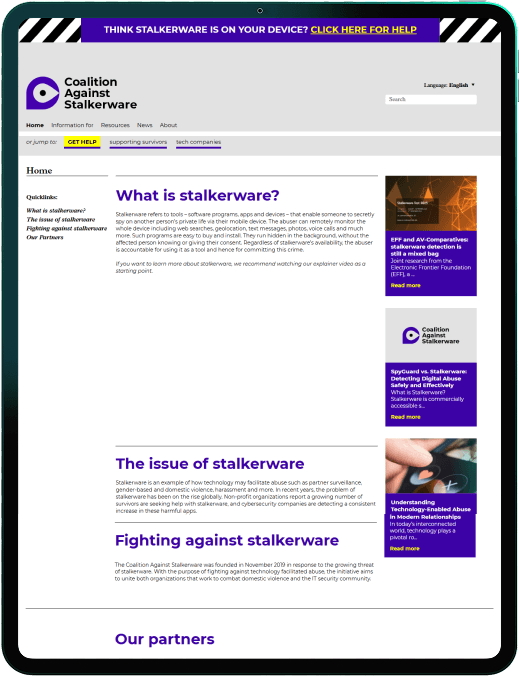
Website of Coalition Against Stalkerware

where you can find direct support if you experience or suspect stalking.

Learn more

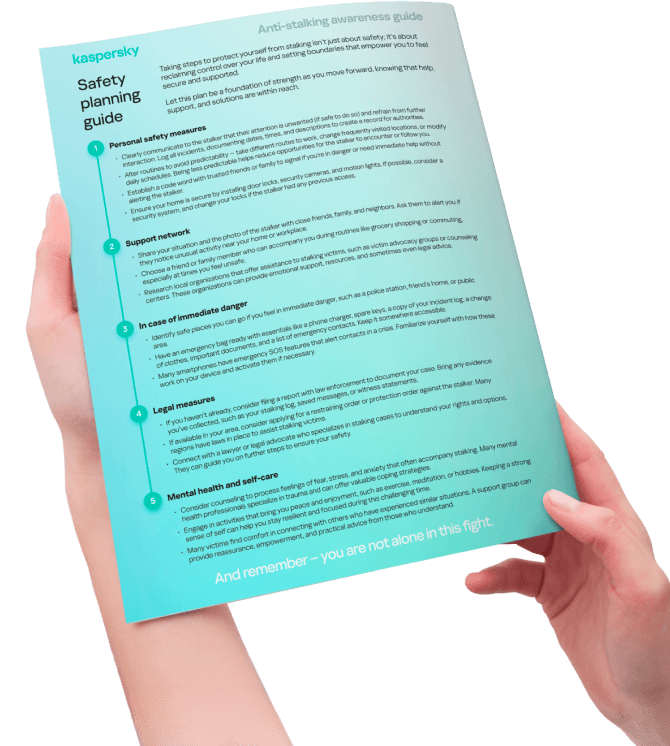
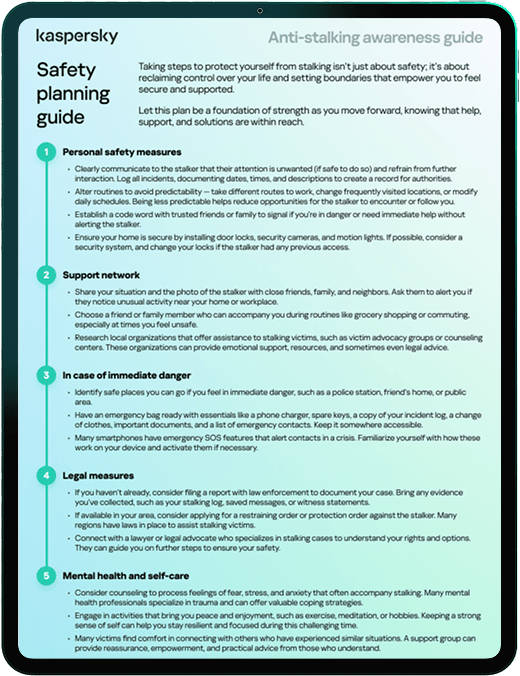
Anti-stalking awareness guide

It includes a safety planning guide, a record-keeping table for documenting incidents, and practical advice for family and friends supporting a loved one affected by stalking.

Learn more

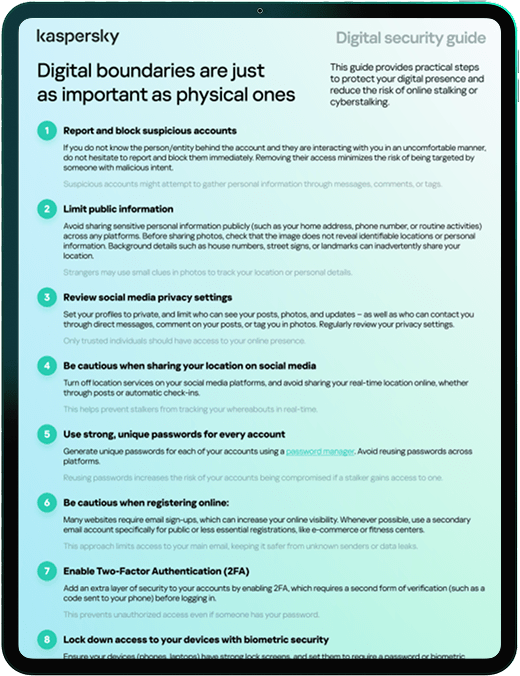
Digital security guide

It provides guidance on safeguarding personal information online, strengthening privacy settings, and reducing digital vulnerabilities that stalkers may exploit.

Learn more